Roofs Built for
Decades of Weather
Roof Replacements in San Antonio for homes with aging systems, visible wear, or repeated leak failures
South Texas summers push roofing materials to their thermal limits year after year, while hail events and wind-driven rain test every sealed edge and fastener point. Nexus Roofing handles complete roof replacement projects across San Antonio when partial repairs no longer justify their cost or when underlying decking has deteriorated beyond safe thresholds. A full replacement resets the clock on protection, eliminates recurring leak patterns, and qualifies for warranty coverage that repairs cannot provide.
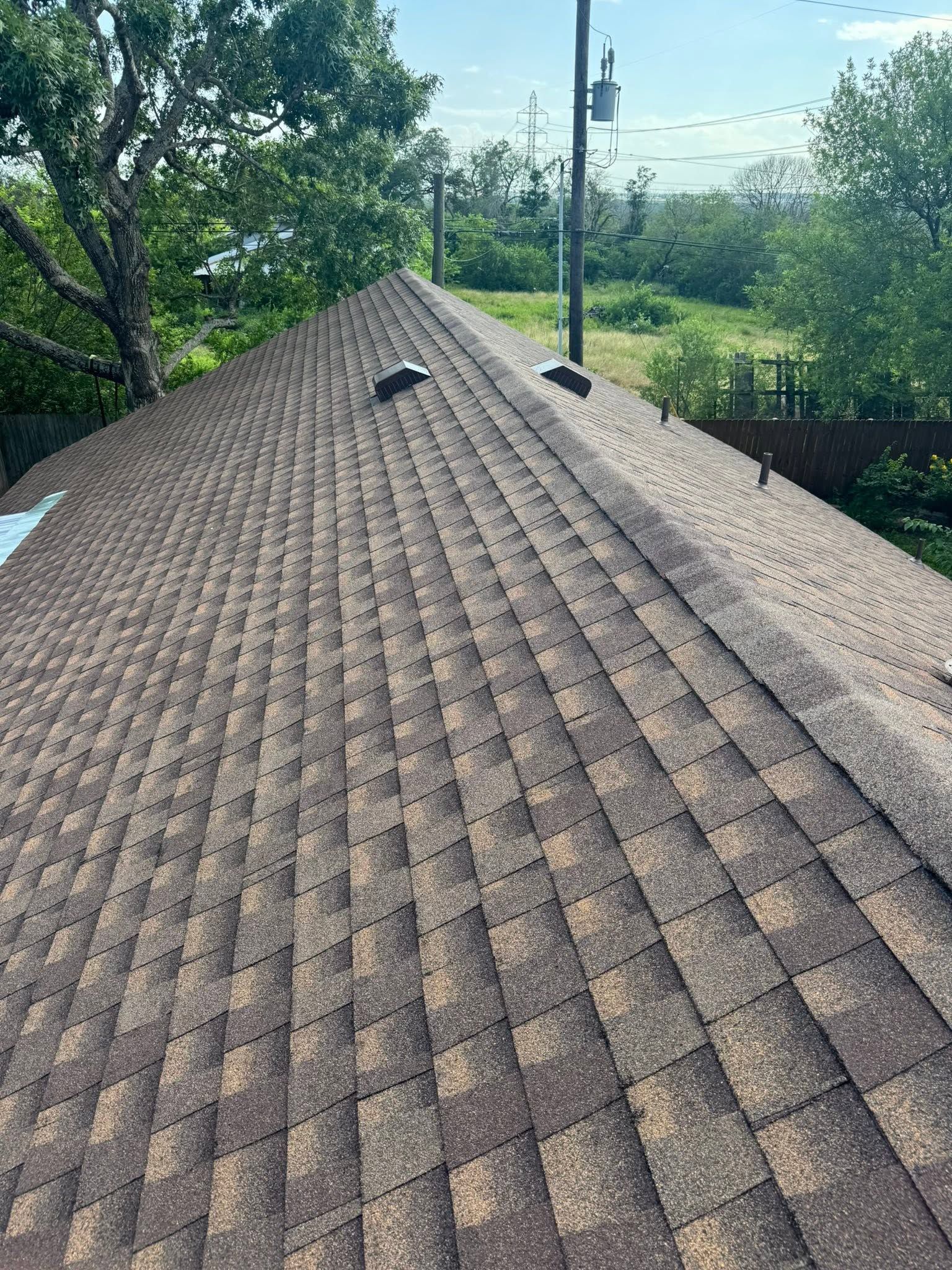
Complete roof replacement begins with decking inspection once old materials are removed, allowing identification of rot or structural issues hidden beneath worn shingles. New underlayment and flashing create sealed barriers around penetrations, valleys, and eave edges before final shingle installation locks each layer into a continuous weather-resistant assembly.
Schedule a property inspection to determine whether replacement or targeted repair offers better long-term value for your specific roof condition.
What a 50-Year Warranty Actually Covers
Qualifying roof replacement systems installed by Nexus Roofing include access to manufacturer warranties extending up to fifty years, contingent on material grade and installation standards that meet specified requirements. This coverage separates material defects from workmanship issues, meaning proper installation and material selection both affect the protection your roof receives over its lifespan.
After replacement completes, you'll notice tighter attic temperature regulation during San Antonio's extreme heat cycles, reduced energy draw from air conditioning systems working against radiant heat transfer, and elimination of stains or soft spots that previously appeared after storms. Curb appeal improves immediately, which directly influences appraisal values if you plan to sell or refinance within the next decade.
The replacement process includes removal and disposal of existing materials, deck inspection and repair if necessary, installation of new underlayment and flashing components, shingle application according to manufacturer specifications, and final cleanup. Each step follows a sequence designed to prevent moisture intrusion at any stage, even if weather interrupts the timeline.
What Property Owners Usually Ask
Roof replacement projects raise practical questions about timing, materials, and long-term performance. These answers address the most common concerns heard from homeowners evaluating whether replacement fits their current situation.
When does replacement make more sense than ongoing repairs?
When repair costs over a two-year period approach half the replacement cost, or when multiple leak sources indicate systemic failure rather than isolated damage, replacement becomes the more cost-effective choice. Continued patching on a failing system delays the inevitable while risking interior damage that exceeds the cost of proactive replacement.
How do material choices affect performance in San Antonio's climate?
Shingles rated for high wind resistance and thermal cycling withstand the combination of intense UV exposure, temperature swings exceeding forty degrees between day and night, and sudden storm events that generate hail and sustained winds. Reflective shingle options reduce attic heat buildup, which lowers cooling costs during extended summer months.
What happens if weather interrupts the replacement process?
Temporary tarping and staged installation protect exposed decking if rain arrives mid-project, allowing work to resume once conditions allow without compromising the underlying structure. Scheduling during San Antonio's drier months reduces weather delays.
How long does a properly installed replacement system last?
Asphalt shingle systems installed to manufacturer standards typically perform for twenty to thirty years before requiring replacement, depending on material grade, ventilation quality, and maintenance consistency. Higher-grade shingles with impact resistance extend usable life in hail-prone areas.
What should I look for during the final walkthrough?
Check that flashing lies flat against all wall intersections, that shingle lines run straight across roof planes, that ventilation components remain unobstructed, and that gutters and downspouts were cleared of installation debris. These indicators confirm that installation followed proper sequencing and detail work.
Nexus Roofing provides free roof inspections and detailed replacement estimates that break down material options, warranty terms, and project timelines based on your home's specific configuration. Request an evaluation to compare replacement costs against the cumulative expense of ongoing repairs and potential interior damage.