
Systems That Stop
Damaging Your Property
Gutter Repair in San Antonio for leaking joints, sagging sections, and blocked drainage causing water damage
Leaking gutters allow water to escape before reaching downspouts, defeating the entire purpose of the drainage system by letting water pool against foundations, saturate landscaping, and stain siding exactly as if no gutters existed. Nexus Roofing repairs compromised gutter systems by resealing separated joints, replacing damaged sections, clearing blockages that cause overflow, and adjusting mounting brackets where gutters have pulled away from fascia boards. Property owners typically request repairs after noticing water dripping from gutter seams during rain, gutters visibly sagging between mounting points, or overflowing even during moderate storms when debris accumulation restricts flow.
Repair work depends on damage assessment—separated seams receive fresh sealant after cleaning and realigning sections, sagging runs get additional mounting brackets to restore proper pitch, holes or cracks require patch material or section replacement, and chronic overflow points to undersized gutters or insufficient downspout capacity that may need system upgrades beyond basic repairs. Inspections identify which issues can be repaired and which require partial or complete gutter replacement.
Arrange an inspection to identify specific drainage issues and determine whether repair or replacement provides better long-term value for your property.
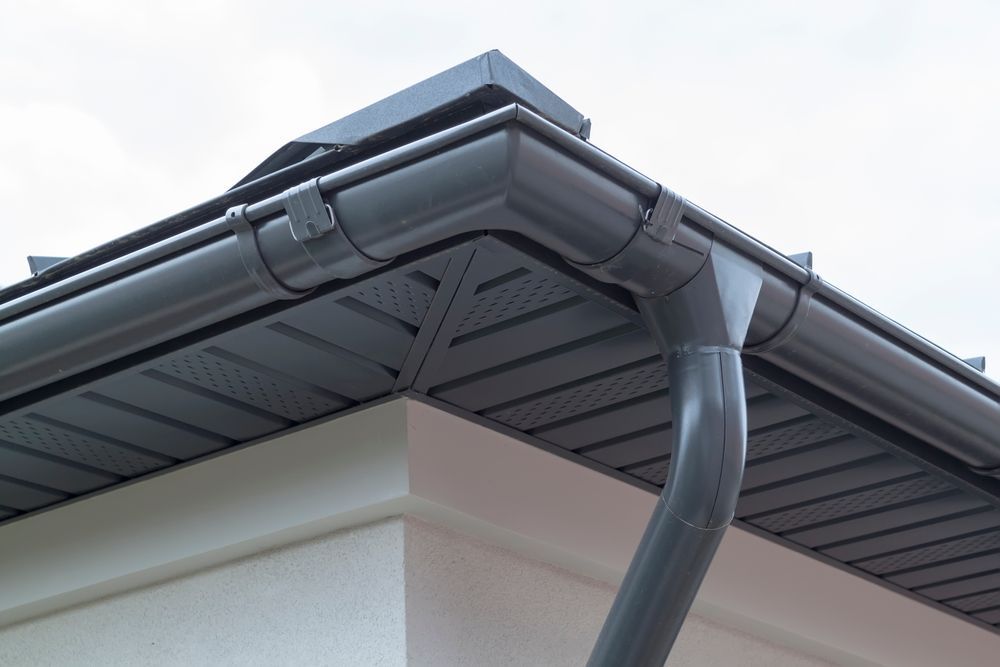
What Changes After Proper Water Flow Resumes
Gutter repairs restore the intended drainage path from roof to safe dispersal locations away from structures. Resealing joints stops water from escaping mid-run, bracket adjustments eliminate standing water where improper pitch caused pooling, and clearing blockages allows full flow capacity during peak rainfall rather than forcing water over gutter edges.
You notice water flowing cleanly through the entire gutter system during rain without dripping from seams or overflowing at corners, downspouts discharging steady flow rather than backing up, and dry conditions near your foundation where water previously pooled. Staining on siding stops appearing after storms when water no longer escapes from damaged gutter sections, and landscaping stays in place without erosion channels forming where overflow previously concentrated.
Timely repairs prevent progressive damage—small leaks that go unaddressed eventually rot fascia boards and soffit materials, requiring carpentry work beyond simple gutter fixes. Sagging gutters pull mounting hardware loose and create stress points where sections separate completely during storms when water weight exceeds compromised attachment strength.
What Property Owners Usually Ask
Gutter repair questions focus on when repairs make sense versus replacement, what causes common failures, and how to prevent recurring problems.
What causes gutters to sag between mounting points?
Bracket spacing that's too wide for the gutter material allows sections to bow downward when filled with water, debris accumulation adds weight beyond design capacity, and sometimes fascia boards deteriorate so brackets no longer hold securely—each situation requires different repair approaches.
When should gutters be replaced rather than repaired?
Extensive corrosion or cracking across multiple sections costs more to patch than replacement provides, severely undersized gutters that overflow even when clean need larger capacity systems, and gutters pulling away from rotted fascia require carpentry work that often makes complete replacement more practical.
How are leaking seams repaired?
Failed seams are separated, cleaned to remove old sealant and corrosion, realigned to proper position, then resealed with butyl rubber or polyurethane sealant rated for exterior water exposure—mechanical fasteners like rivets or screws sometimes supplement sealant at high-stress joints.
What prevents clogs from recurring?
Gutter guards or screens block leaves and debris while allowing water to enter, regular cleaning removes accumulated material before it blocks flow, and trimming overhanging tree branches reduces the volume of debris falling directly into gutters during storms and high winds.
Can individual gutter sections be replaced in San Antonio?
Damaged sections can be cut out and replaced with new material joined to existing runs using slip connectors and sealant—matching material and profile ensures seamless appearance and proper function without replacing the entire system.
Prompt gutter repairs prevent minor drainage problems from escalating into foundation damage, landscape erosion, and interior water intrusion that costs substantially more to remedy. Contact Nexus Roofing to evaluate your gutter system and receive recommendations for repairs that restore proper drainage function before additional property damage occurs.