
Temporary Protection Following Severe Weather
Emergency Roof Tarping in San Antonio for homes and businesses facing additional damage after unexpected roof failures
Hailstorms and straight-line winds arrive with little warning across south-central Texas, tearing shingles from roof decks and exposing underlayment that deteriorates within hours under direct sun and rain. Emergency tarping provides temporary protection that reduces additional interior and structural damage while permanent repairs are being planned, insurance claims are processed, or replacement materials are ordered. Fast deployment matters because every rain event following initial damage pushes moisture deeper into attic spaces, insulation, and wall cavities, compounding repair costs with each delay.
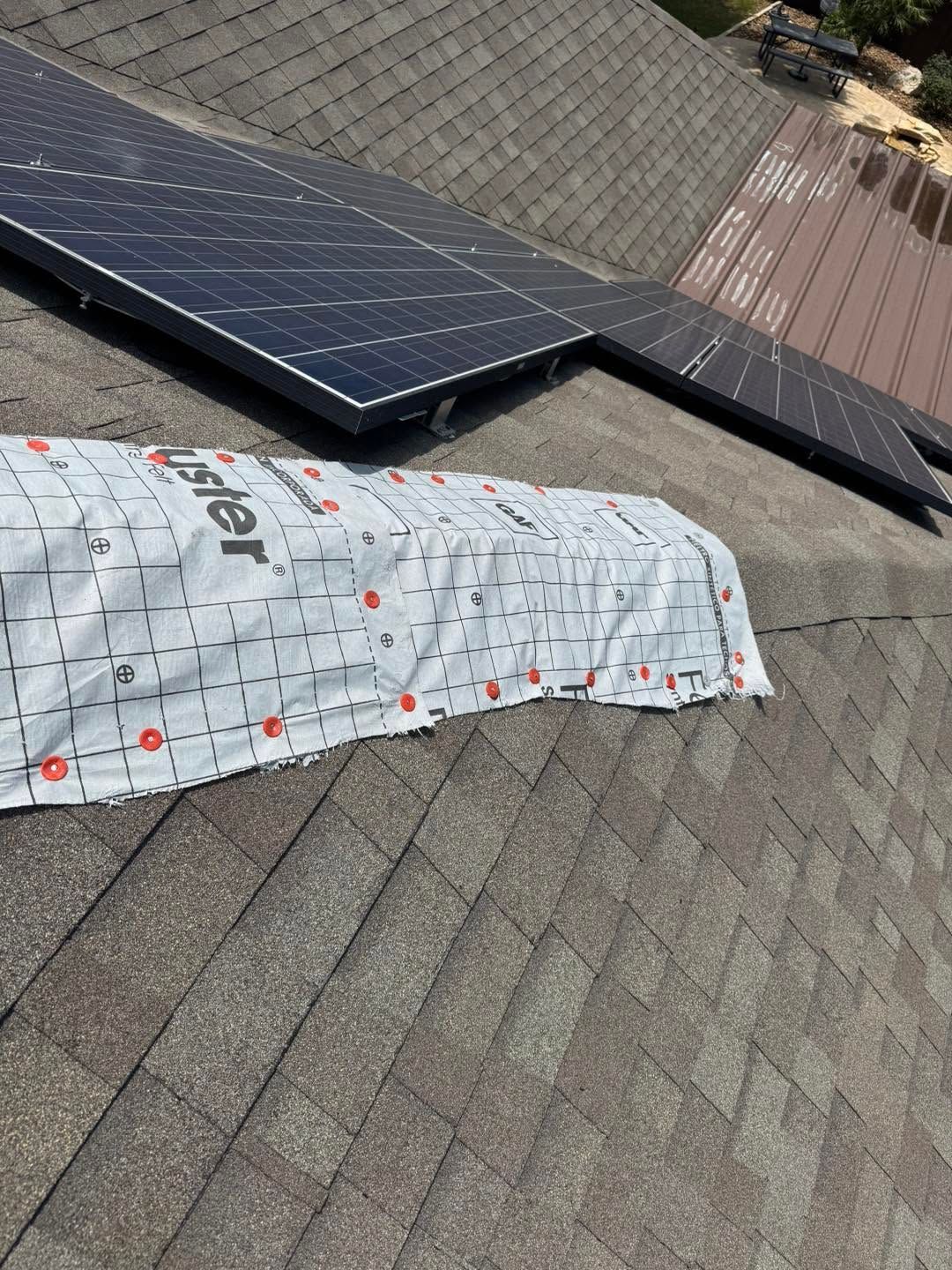
Tarping involves securing heavy-duty polyethylene sheets across compromised roof sections using fasteners driven into solid decking, with weighted edges that resist wind uplift during subsequent storms. This temporary barrier blocks rain penetration and UV exposure until permanent roofing materials restore full protection.
Contact our team immediately following storm damage to arrange emergency tarping before the next weather system arrives.
What Proper Tarping Prevents
Correctly installed tarps extend beyond damaged areas by at least two feet on all sides, ensuring that wind-driven rain cannot infiltrate edges or seams where panels overlap. Fastening at intervals matching anticipated wind loads prevents billowing that tears tarps loose or drives water underneath, and sandbag weighting along ridges adds stability without penetrating already-compromised decking.
After tarping secures the breach, you'll notice stopped interior dripping, stabilized moisture levels that prevent mold establishment, and protected belongings that remain dry despite ongoing weather. Attic spaces stay ventilated without direct rain entry, preventing the saturation-collapse cycle that occurs when insulation absorbs standing water.
Emergency tarping often coordinates with insurance claims when storm damage triggers coverage, meaning documentation of tarp deployment, photographs showing damage extent, and itemized emergency service invoices support claim processing. Nexus Roofing provides the detailed records adjusters require while ensuring tarping meets temporary protection standards that prevent claim disputes over preventable secondary damage.
Questions Before Starting Your Project
Emergency tarping raises immediate questions about durability, timing, and insurance coordination. These answers help property owners understand what tarping accomplishes and what steps follow initial deployment.
How long can emergency tarping remain in place before permanent repairs are needed?
Tarps withstand two to four weeks of typical San Antonio weather, including moderate rain and sun exposure, but prolonged placement risks UV degradation, fastener pullout, and edge lifting that compromises protection. Permanent repairs should begin within this window to avoid tarp failure and renewed leaks.
What roof damage situations require emergency tarping versus immediate permanent repair?
Extensive damage affecting large roof sections, structural hazards requiring engineering assessment, or situations where replacement materials need ordering justify tarping as temporary protection. Small localized breaches repairable within one day may skip tarping and proceed directly to permanent repair.
Will my insurance cover emergency tarping costs?
Most property policies include provisions for reasonable emergency mitigation expenses, including tarping deployed to prevent additional damage following covered storm events. Retain all invoices and photographic documentation showing pre-tarp damage to support reimbursement claims.
How do tarping crews secure materials during high winds?
Industrial tarps are fastened using screws driven through batten boards into solid decking at twelve-inch intervals, with sandbags placed along ridge lines and eaves to add weight without penetrating compromised areas. This combination resists wind uplift exceeding typical storm gusts in the region.
What preparation helps tarping crews work quickly after I call?
Clear ground-level access paths to the damaged roof section, move vehicles away from the work zone, secure pets indoors, and photograph interior damage before tarping stops active leaks. Quick access allows crews to deploy tarps rapidly before additional rain arrives.
Nexus Roofing responds rapidly to emergency tarping requests across San Antonio, deploying experienced crews equipped for quick stabilization following severe weather or
unexpected roof failures. Reach out immediately when storm damage leaves your property exposed, and we'll coordinate fast deployment to protect your home or business while permanent solutions are arranged.