Roofs That Stay
Functional for Decades
Metal Roof Restoration in San Antonio for aging systems showing wear from sun exposure and seasonal storms
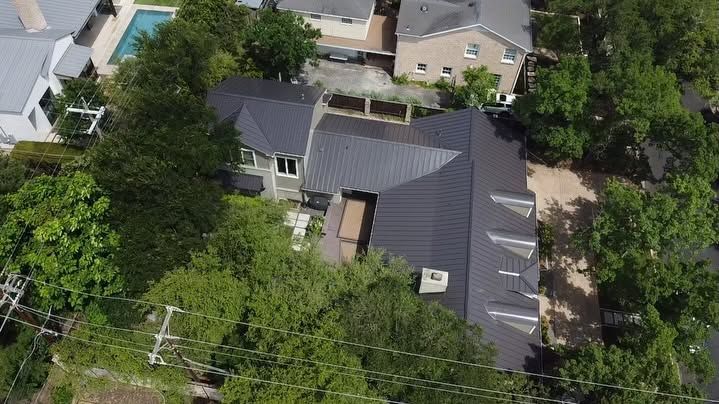
Metal roofing systems across San Antonio face intense UV degradation, thermal expansion cycles, and pooling water from seasonal downpours that gradually compromise protective coatings and fastener seals. Nexus Roofing performs metal roof restoration that addresses these failure points through systematic cleaning, targeted repairs, resealing penetrations, and applying protective coatings designed for South Texas heat. Property owners with metal roofs installed fifteen to twenty years ago typically see surface oxidation, minor panel separation, or fastener back-out that restoration resolves without full replacement expense.
Restoration involves removing accumulated debris and oxidation, repairing compromised fasteners and seams, sealing panel overlaps and penetration points, then applying reflective elastomeric coatings that bond directly to cleaned metal surfaces. This process re-establishes the waterproof barrier while reflecting solar radiation that otherwise transfers directly into the building below.
Schedule a metal roof inspection to evaluate whether your system qualifies for restoration or requires replacement.
What Restoration Prevents Long-Term
The restoration process targets specific failure mechanisms common in aging metal roofs—fastener corrosion that allows panel movement, seam separation from thermal cycling, and coating breakdown that exposes bare metal to moisture. Cleaning removes contaminants that accelerate corrosion, while resealing addresses water entry points before interior damage occurs.
After restoration completes, you see uniform coating coverage across all panels, sealed seams and fasteners, and a reflective surface that noticeably reduces heat absorption during summer months. Interior temperatures drop when roof surfaces no longer conduct radiant heat directly through metal panels, reducing cooling loads in warehouses and commercial spaces with minimal insulation.
Restoration typically costs forty to sixty percent less than full replacement while extending serviceable roof life by ten to fifteen years when applied to structurally sound systems. The approach works for both residential metal roofing and commercial standing seam systems where substrate and framing remain intact but surface protection has degraded.
What Property Owners Usually Ask
Metal roof restoration addresses concerns about extending system life, understanding the process, and determining whether existing roofs qualify for treatment rather than
requiring full roof replacement.
How does restoration compare to replacement cost?
Restoration runs substantially lower in expense because it preserves the existing metal panels and substrate while renewing protective layers—no tear-off, disposal fees, or structural work unless damage assessment reveals compromised decking beneath.
What determines whether a metal roof qualifies for restoration?
The substrate must remain structurally sound with no widespread rust-through, panel integrity must be intact without extensive denting or punctures, and the fastening system must hold securely when tightened—surface wear and coating failure alone don't disqualify a roof from restoration.
How long does the restoration coating last in San Antonio heat?
Properly applied elastomeric coatings withstand UV exposure and thermal cycling for ten to fifteen years, though actual lifespan depends on roof slope, shading, and whether regular debris removal prevents standing water that degrades any roofing material over time.
What happens during the restoration process?
Crews pressure wash panels to remove oxidation and contaminants, repair or replace compromised fasteners and flashings, apply primer to prepared surfaces, seal all seams and penetrations with compatible sealant, then roll or spray elastomeric coating in multiple passes to achieve specified mil thickness.
Does restoration improve energy efficiency?
Reflective coatings reduce solar heat gain by bouncing back infrared radiation before it transfers through metal panels—commercial buildings often see measurable drops in daytime interior temperatures, particularly in spaces with metal deck ceilings where heat transfer is most direct.
Nexus Roofing performs restoration on both residential and commercial metal roofing systems where structure remains sound but protective layers have worn thin. Contact our team to arrange an inspection that determines whether your metal roof qualifies for restoration or requires replacement based on substrate condition and panel integrity.